Monday, March 25, 2019

New Hibok-hibok Trail is a Bucket of Biodiversity

Local authorities in the Province of Camiguin is considering opening of new trail to Mt. Hibok-hibok, paving way for the official launching of its Itom trail last March 23. I joined the launching and familiarization day hike along with fellow mountaineers and digital influencers from all over the country. Although there is a national advisory of the mountain’s closure as a preventive maintenance before the El Nino reaches its peak season this year, the launching is somehow very timely in order for the LGU to further polish its regulations prior to the formal opening of Itom trail anytime this year.

Pitcher Plants along Itom Trail
The trail is approximately a 6-kilometer stretch from the jump off point in the DENR PASU station to the highest point which measures 1,332 masl. The climb was never a boring one as we were entertained by the varied showcase of the trail’s biodiversity and the equally jolly company of the expedition team. The cute summit offers another appealing site to behold which had us witnessing a 360-degree view of the entire Camiguin Island in broad daylight including the popular Vanishing and Mantigue Islands and the adjacent highest point Mt. Timpoong on the other side.

Athrophaneura semperi supernotatos - a Philippine Endemic Butterfly
 Since the trail is new, most of us had a slower pace which was really fine we were able to distinguish the rich flora and fauna of Mt. Hibok-hibok. The jump off point itself is home to assorted butterflies and birds while the entire trail serves host to amazing flora species, some common to me while others are new and native in the place, the most dominant are the huge tree species decorated with mosses, pitcher plants, wild romblon and giant rattan. As we approached through higher elevation the vegetation becomes stunted, proof of Mt. Hibok-hibok’s volcanic characteristics just like other volcanoes in the country which has mineral vents and deposits.


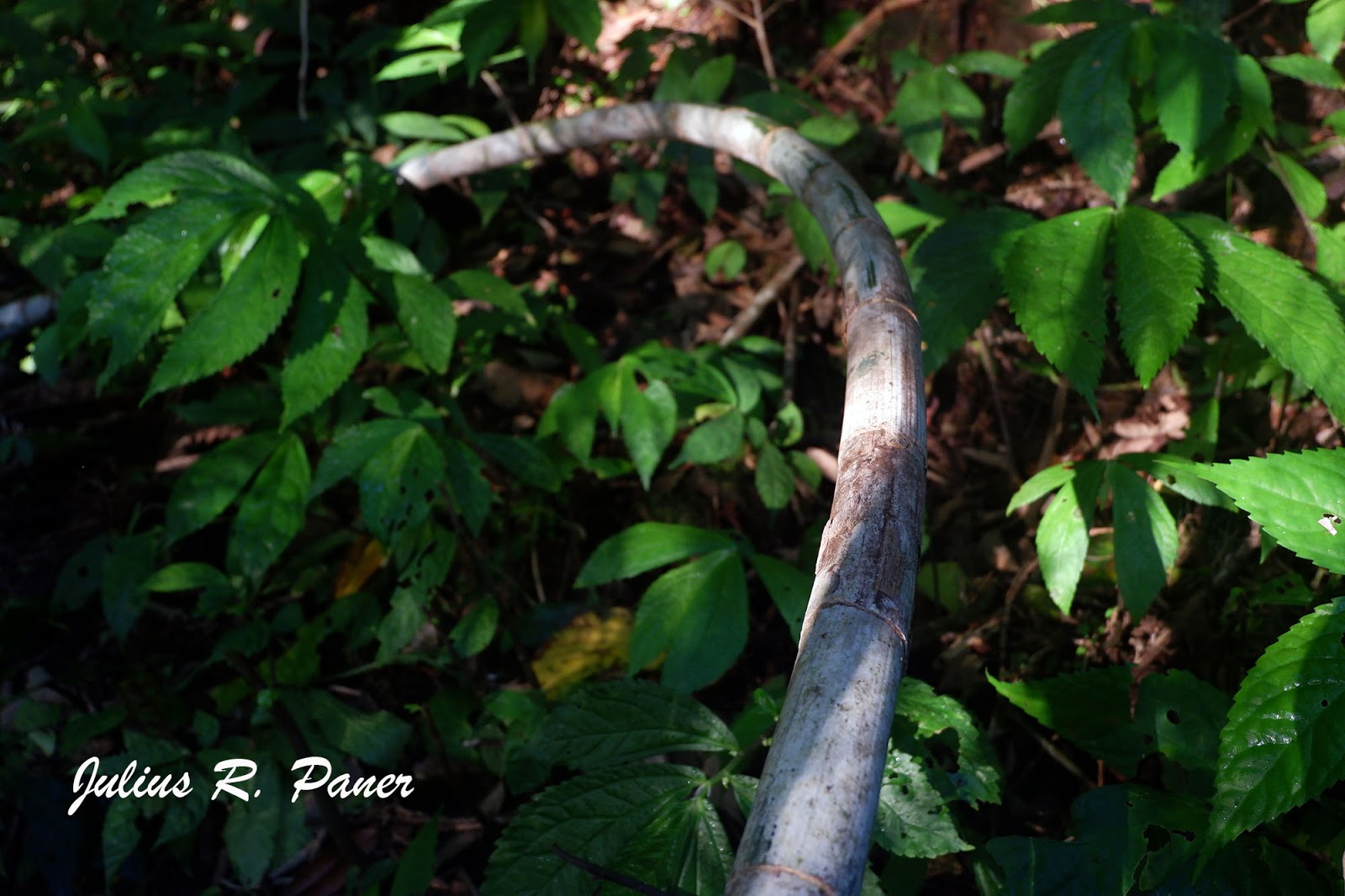
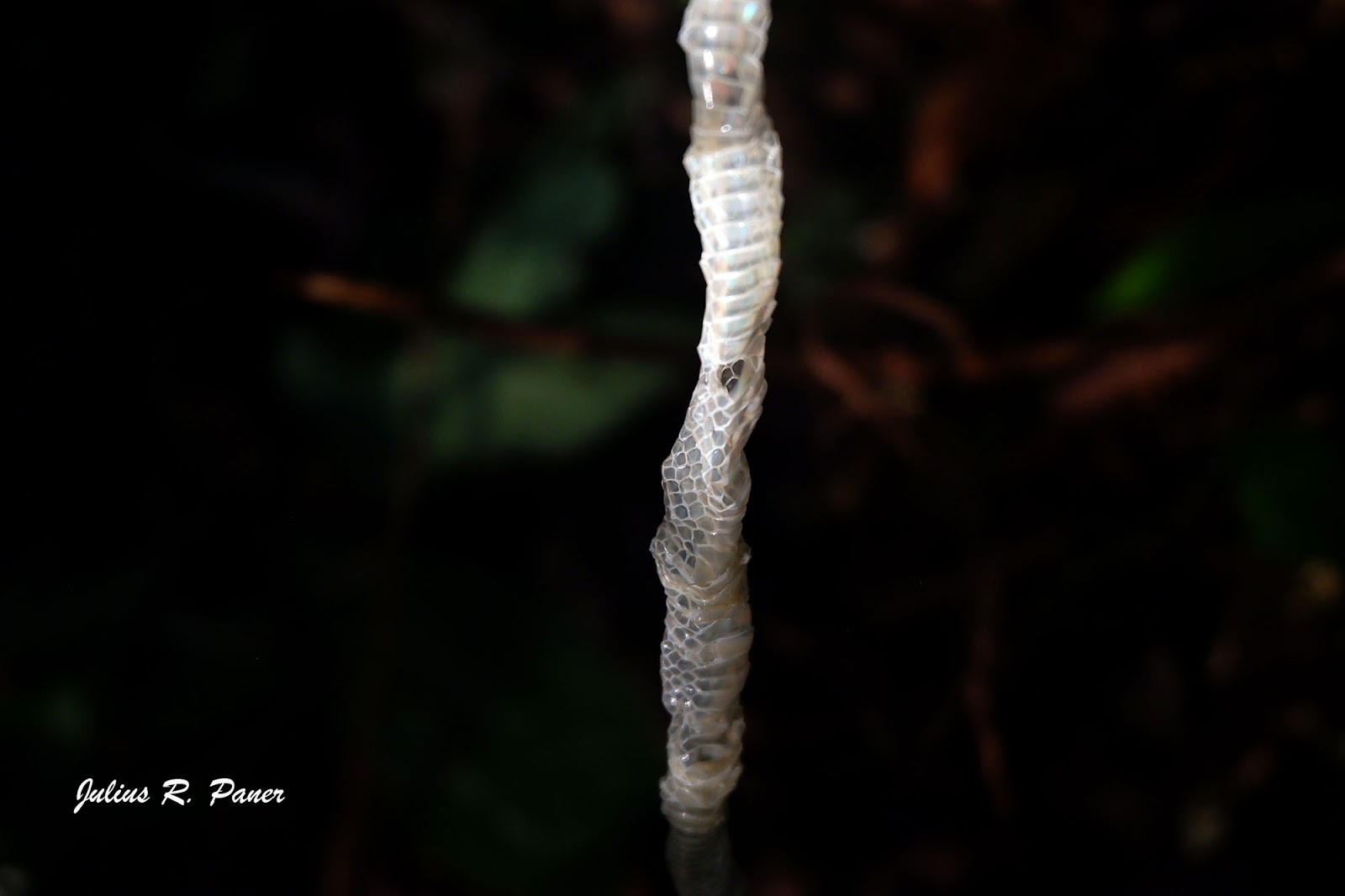
We did not notice presence of wild animals but some indirect observations led us to determine the existing fauna in Mt. Hibok-hibok. Tracks of wild boar, sounds of common frogs, dried skin of snake, leftovers of monkey foods and some personal romance with leeches (I had one cute bite) simply manifest that the mountain is really unspoiled.  

Track of Wild Boar

Leftovers in a dining place of monkeys
A dried snake skin
Love at first leech bite
The wide canopy of trees in Mt. Hibok-hibok also serves as abode of several bird species. The Camiguin Bulbul, endemic in the island, is the most widespread. This was previously identified as the Yellowish Bulbul but was later on split due to its distinct physical attribute and unique sound. I was even told by a local guide that Camiguin Bulbul could produce 16 different sounds. A subspecie of Black-naped Monarch is another lifer, this one located only in Camiguin. This is an interesting subspecie though as told by Pete because there is no black in the nape. Other than these two Camiguin endemics I also saw appearances of Turquoise Flycatcher, Rufous Paradise Flycatcher, Purple-throated Sunbird, Yellowish White Eye, Everett’s White Eyes, White-eared Brown Dove, Spotted Dove, Philippine Cuckoo Dove, Brahminy Kite, Philippine Serpent Eagle, Yellow-vented Bulbul, Olive-backed Sunbird, Zebra Dove, Orange-bellied Flowerpecker, Red-keeled Flowerpecker, Coppersmith Barbet and the invasive Asian Glossy Starlings.  
  
A subspecie of Black-naped Monarch located only in Camiguin
Spotted Dove
Yellowish White Eye

Yellow-vented Bulbul
Rufous Paradise Flycatcher 

Camiguin Bulbul
With all these information it is but fitting that the LGU of Camiguin and the DENR should level up their partnership in order to conserve and protect Mt. Hibok-hibok amidst ecotourism activities. Ecotourism should be a tool to further boost the mountain’s biodiversity and not a vehicle towards destruction.

Meanwhile, here is a glass to the organizing committee of the launching climb for a job very well done. Special credit is due to the Provincial Government of Camiguin particularly the Tourism Officer Miss Candice, Potpot and the rest of the Gang, as well as to the PASU office. Thank you so much for inviting me. You made us all overwhelmed with the hospitality that I think is one of a kind in the Philippines. The adventure turned out to be a gastronomic experience as well.

To USEC Art Boncato of DOT, my salute to you Sir for helping local government units in advocating responsible mountain tourism, or in the case of Camiguin – volcanic tourism. I hope all leaders would be able to learn from you.

Pinoymountaineer.com author Doc Gideon Lasco and seven summitter Carina Dayondon
The Fighter Boys led by Kulas 
To the solid group of mountaineers, this is all about us and the mountain. By spreading good vibes we will surely make this initiative rather than break it. It was nice climbing with Carina Dayondon, the lone Filipina seven summitter, and to Doc Gideon Lasco who had been responsible in spreading and enriching related literatures of Philippine mountaineering. The group of Kulas was also a nice company in the mountains, as well as the two pretty and intelligent influencers from Luzon Celine Murillo and Kara Santos. And of course to renowned photographer and mountaineer Rhonson Ng, thanks for the good company Brod. 

Tuesday, March 5, 2019

Account of a Solo Birding in Malalag

Part of my long-weekend schedules on February 24 was a solo birding trip in Malalag, Davao del Sur, a town considered as the best birding site in the entire province. I took an early bus trip to Digos and Malalag by 5:00 in the morning and arrived at the birding venue by 6:30. The site is a huge fishing pond that stretches to the border of Malalag and the municipality of Sulop going north.
 
Common Red Shank
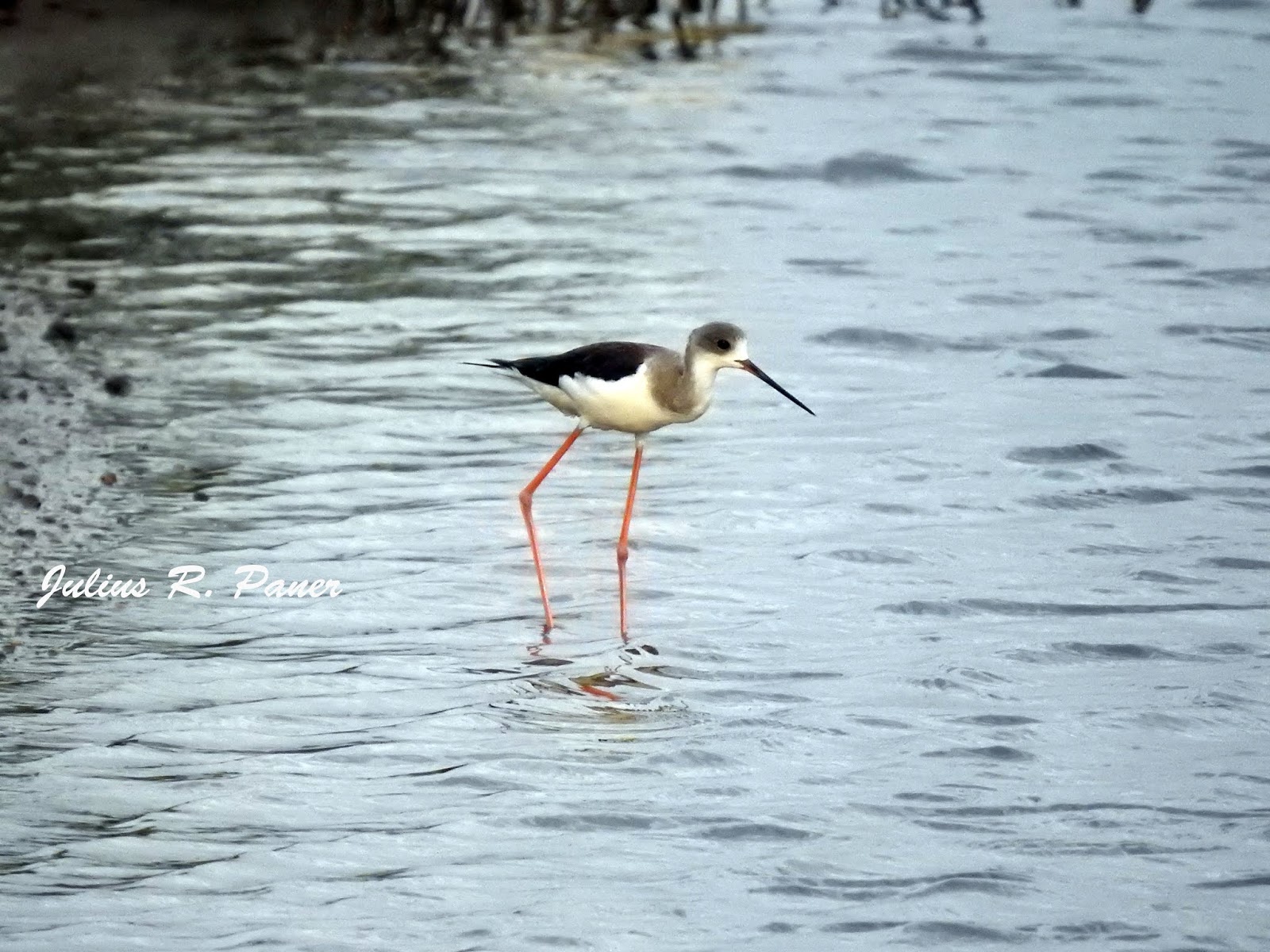
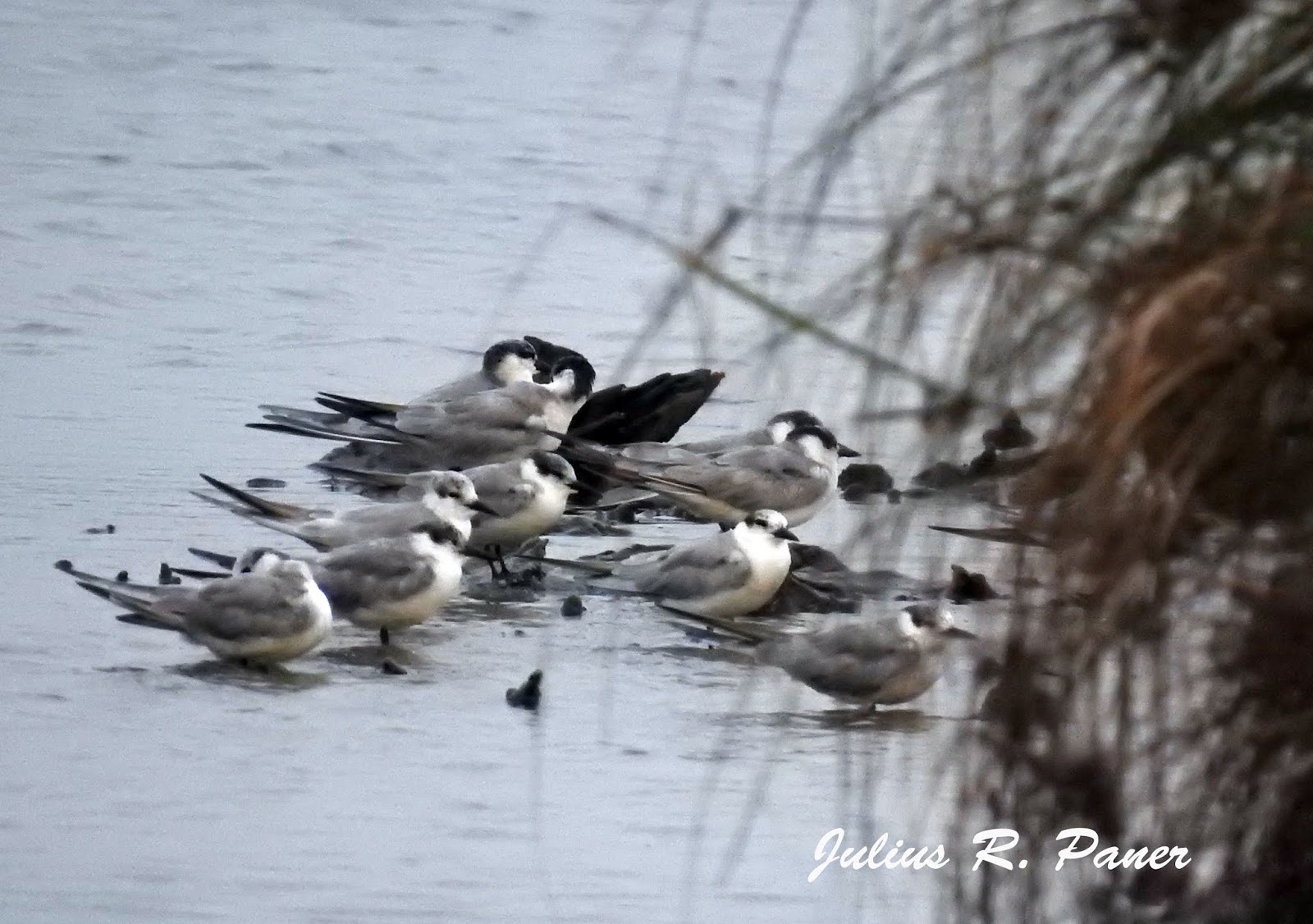
I was welcomed by flock of waders in the façade of the ponds comprised of White-headed Stilts, Common Sandpipers, Whiskered Terns, Grey-tailed Tattlers, Grey Plovers and the Great Egrets.As I walked through the mangrove reserves two classes of kingfishers showed up – the Common Kingfishers and Collared Kingfishers.

White-headed Stilt
Common Sandpiper
Whiskered Terns
Grey Plover
Great Egret
Collared Kingfisher
Common Kingfisher
Some notable wading items such as Whimbrel and Common Greenshank, as well as the Striated Heron and Javan Pond Heron are also good scenes of the area.

Whimbrel

Common Greenshank
Javan Pond Heron
Grey Wagtail
Striated Grassbird
A total of 30 species in less than two hours were recorded in this first ever solo birding in this locality. I left the place by 8:30 and arrived home by 9:15.

1     White-headed Stilt
2     Great Egret
3     Little Egret
4     Javan Pond Heron
5     Striated Heron
6     Whiskered Tern
  Common Redshank
7     Common Greenshank
8     Grey Plover
9     Grey-tailed Tattler
1     Common Sandpiper
            Whimbrel
1     Grey Wagtail
1     Striated Grassbird
1     Collared Kingfisher
1     Common Kingfisher
1     Golden-bellied Gerygone
1     Barn Swallow
1     Asian Glossy Starling
1     Olive-backed Sunbird
2     Philippine Pied Fantail
2     Eurasian Tree Sparrow
2     White-breasted Woodswallow
2     Yellow-vented Bulbol
2     Large-billed Crow
2     Asian Palm Swift
2     Red-keeled Flowerpecker
2     Zebra Dove
2     Chestnut Munia
2     Brown Shrike

By the way,Malalag is the last municipality in the province of Davao del Sur situated just around 40 kilometers from the commercial center of Digos City.

Monday, February 18, 2019

Hail to you, Liguasan Marsh

The Liguasan Marsh trip last February 8-10 was truly a pleasant surprise. At first I was hesitant to join what with my wifey again having a negative stance of the destination. Yes, Liguasan Marsh was a haven of terrorists before but the process of transformation has just started to make this place a tourist attraction especially for naturalists. A special kind of salutation is due to the 33rd Infantry Batallion of the Philippine Army for always in the forefront of employing a community-based peace and development mechanism. Hats off to its Batallion Commander  Col. Harold Cabunoc.
  
  
Liguasan is indeed a paradise. Barring all the high magnitude of negative image built about the place and other surrounding environment this could have been a high end tourism product already. Liguasan is one of the two major marshes in Mindanao that serve as a water bed to several localities such as Sultan Kudarat, Maguindanao and Cotabato provinces. In it are valuable resources like inland fishes and birds. It also fertilizes adjacent farmlands by the huge water it transported to agricultural production areas either through manual irrigation or underground water supplementation. And lately it has been considered that Liguasan Marsh has vast deposit of oil. All these are potentials that could really convert its host LGUs into rich towns if properly manage maximize.


Meanwhile, our birding trip in Liguasan was organized by the 33rd IB, hoping that somehow Bird Watching could become a good strategy for tourists to visit the site soon. We started the navigation through the marshland by 6:00 in the morning as we still had to attend to a community immersion in barangay Midpandacan, the last community composed mainly of Maguindanaons. Some of them even members of the Bangsamoro Islamic Freedom Fighters (BIFF) who are now serving the community as guides and boatmen.


Right at the docking point we already saw some familiar waders such as egrets and herons but this time not very clear yet as to the specific specie because it was still dark by 6 AM. I spotted a type of Warbler in a grassland portion, but the most that I could identify was the White-browed Crake wading through the large portion of water hyacinths. The average-sized motorized boats were our transportation mode, the easiest mode by far to go through water lily routes in the marsh. Along the way there were plenty of Purple Herons, Grey Herons and Javan Pond Herons.


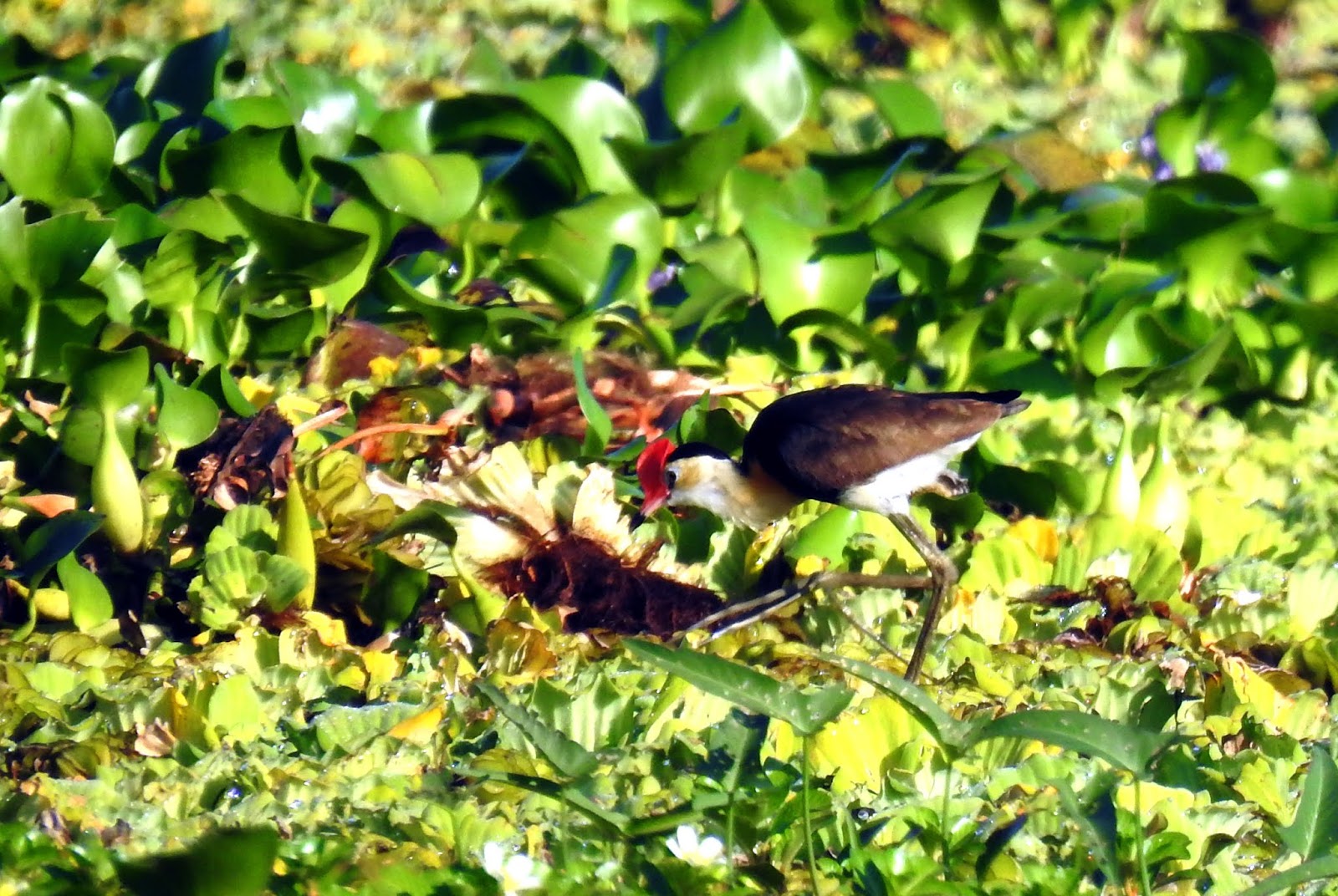
I suggested to our boatman to look for shallow portion so we could have good ground stability while taking bird photos. So we stopped by a certain site filled with greater numbers of Purple Swamphen. On the way further we saw some Comb-crested Jacana, the one considered by expert birders to have been last cited in 1973. This bird has a very attractive color and a lifer to me and some other guests. It is good to have it recorded once again after terrorism prevented birders for seeing them. Although a resident bird, the Comb-crested Jacana can only be seen in Liguasan Marsh and Lake Buluan, all in the province of Maguindanao and Tacurong City.


Other common birds I personally observed in the marsh are Philippine Duck, Whiskered Terns, the rare Spotted Whistling Duck and Black-winged Stilt. A special Black-winged Kite raptor was also seen in the tree canopy of Midpandacan barangay proper.


After our birding session we were invited by Col. Cabunoc to witness a Rido Settlement ceremony, a conflict-resolution mechanism for two clans who have been into war for more or less two decades. With the geographic characteristic of the locality and the traditions of its inhabitants rido is still a thing here, I mean they still resort to it whenever miscommunication and misunderstanding happen against each clan. With the able leadership of the 33rd IB the rido finally came to end.


There might a lot of reluctance when I decided to join this trip but since the invitation of Sir Lito Lim, also a birder and naturalist, was an assurance I made it all the way there. And just as expected the 240,000 hectares of beautiful marshcape of Liguasan is a total revelation.