Sunday, May 17, 2015

Indonesia Triple Crossover Climb Series 1: MT. SEMERU

Beneath the vast mountain ranges of East Java lie several volcanoes that have become an icon of mountaineering in Indonesia. This part of the earth is unique in a sense that it has several attributes that separates it from other tropical mountains in Asia and other parts of the world.


Last week I stayed in Indonesia for 6 days along with my very good friends Josephine Devera and Pare Oliver “Dockie” Enot to discover three of its mountains there; Mt. Semeru, Mt. Bromo and  Mt. Ijen. These heaps were particularly laid into the island of East Java and we came all the way there using the Manila-Kuala Lumpur-Surabaya route. Our long plane travel with Pare Dockie from Davao added several strain as it took us almost 15 hours to reach the city of Surabaya, one of Indonesia’s cleanest cities.

Our first stop was Mt. Semeru, the highest mountain in Java and third highest in Indonesia. It is a major hiking destination that entails a lot of physical preparation especially if one decides to trek its summit. Mt. Semeru is also called Mahameru by Indonesians, meaning “The Great Mountain”. Pare Dockie, Josephine and this blogger tried to seek information as to who were the first Filipino mountaineers who already climbed Mt. Semeru. We are interested into this because there is no record as of yet in as far as our guide is much concerned. It might be unofficial but we can partially say that we were possibly the first Pinoys to have reached this summit.


Meanwhile, we did the trekking in three days, with the first and third days just an easy plain trail hiking and sight-seeing. On the second day, however, the summit attack was traumatic. The itinerary crafted by our guide Amit was quite favorable. We started the hiking in Panu Rane (7 hours ride from downtown Surabaya), a small community some 2,000 meters above sea level. This spot also serves as a stopover for mountain climbers. The home stay program they devised to accommodate their guests is very helpful especially if climbing groups want a comfortable pre-climb sleep. Panu Rane is more or less 8 kilometers to Kali Mate campsite, the last campsite before heading to Semeru summit. Along the way there are break stations they called POS 1, 2 and 3 where vendors sell fruits and local delicacies.  The huge plain landscape in Kali Mate is suitable for big group camping. It has available water sources also.


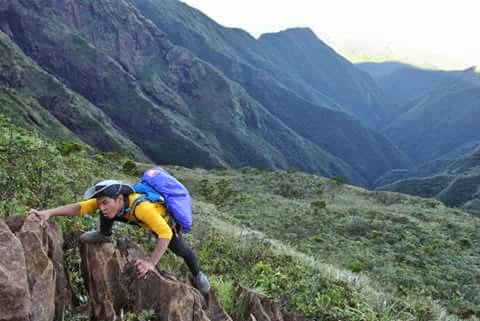
We started the summit attack on the second day in a very early 1:45 in the morning with a chilling temperature of 6.5 degrees Celsius. Standing tall at 3,676 meters above sea level, Mt. Semeru is one hell of a mountain to climb in its last 3 kilometers track. If in Mt. Apo we have our Boulder Face just before the summit, Semeru has its Sand Face – a long and grueling portion for mountaineers to traverse because of the sandy facet of the mountain. Our summit attack was interrupted with the gravity of sand. And because Mt. Semeru had erupted several times in the past, the remnant of lahar and other volcanic matters occupy a large portion of the summit trail. In the sandy trail you cannot afford to relax because anytime the sand may roll down and there is a big chance for you to be swayed away along with the sand all the way down. The rocks are extremely loose, therefore sitting into it is not a good idea as it may fall quickly. Along the way we saw many climbers descending without even reaching the summit. There was even a woman climber who suffered hypothermia during the ascent. They could not surmount the extremity of the summit track.


At around 7:00 in the morning, we reached the summit of Mt. Semeru. The setting is beautiful featuring a 360-degree view of the entire Java Island. On the other side we saw Mt. Bromo and Mt. Penunjakan. Our team stayed at the summit very quickly because the temperature and strong wind were hard to bear.


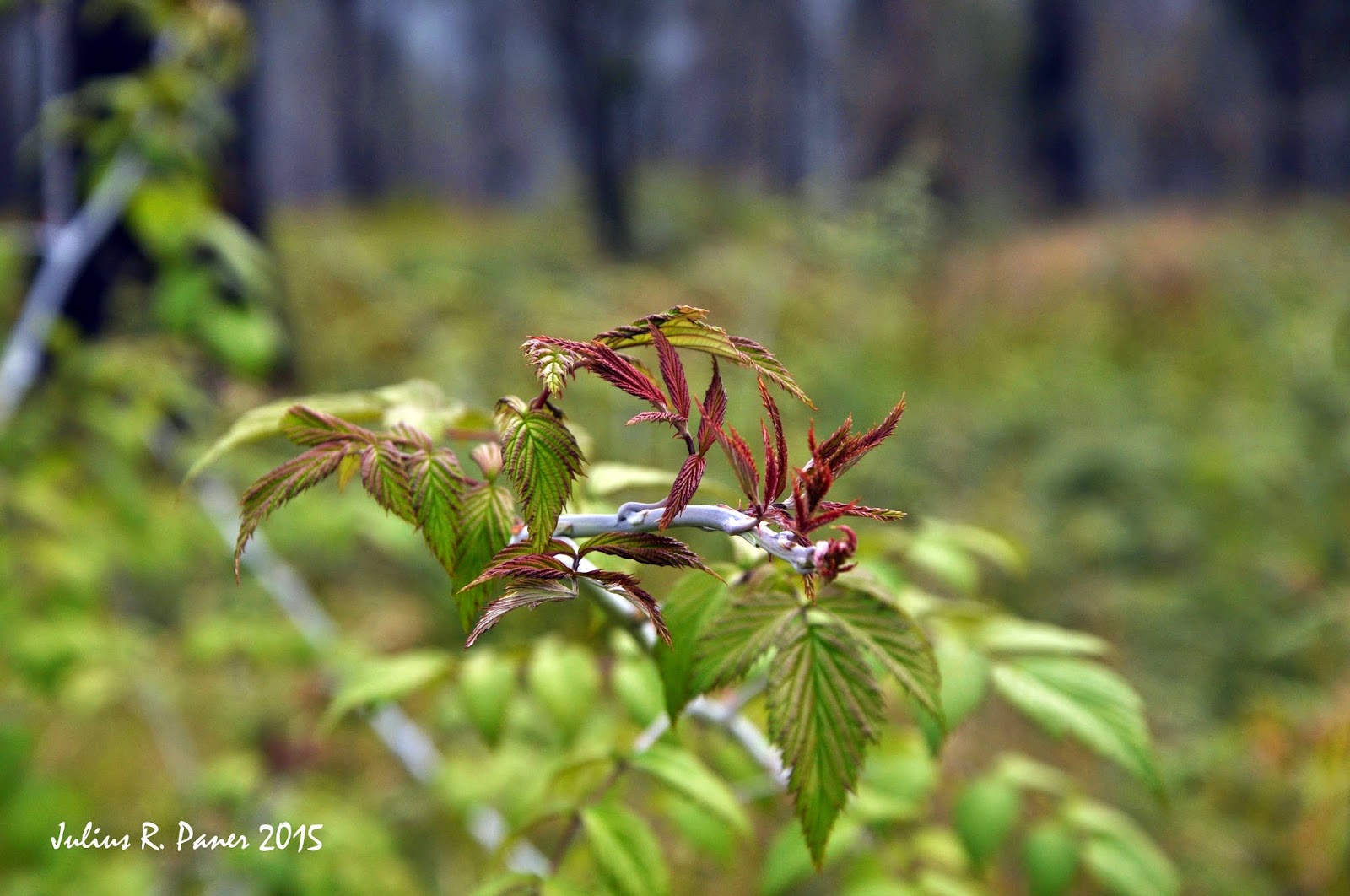
The descent was quite fine we arrived back to Kali Mate camp in less than two hours. Our next stopover in the second evening was at Ranu Kumbulo. While trekking to Ranu Kumbulo, we saw the glory of Mt. Semeru as we passed through several gorgeous sights including the pine trees dominating the vegetation of the area. Some flora species were common in tropical sites just like ours in the Philippines but I saw some strange plant life such as these pictures:


We reached Ranu Kumbulo 3:00 in the afternoon and spent the rest of the evening there. One good thing about Ranu Kumbulo is that it is where climbers converge, from the slow trekkers coming from Ranu Pane and the summiters from Kali Mate. We enjoyed the view of the Ranu Kumbulo lake. The still water is amazing as it was kissed by the vertical hills. The lake is also the source of drinking water for mountaineers. We were told by Amit that the lake had once a shoot venue of a local movie in Indonesia entitled 5 centimeters. Ranu Kumbulo, just like the Semeru summit, is surrounded with mystery as the locals would put it.
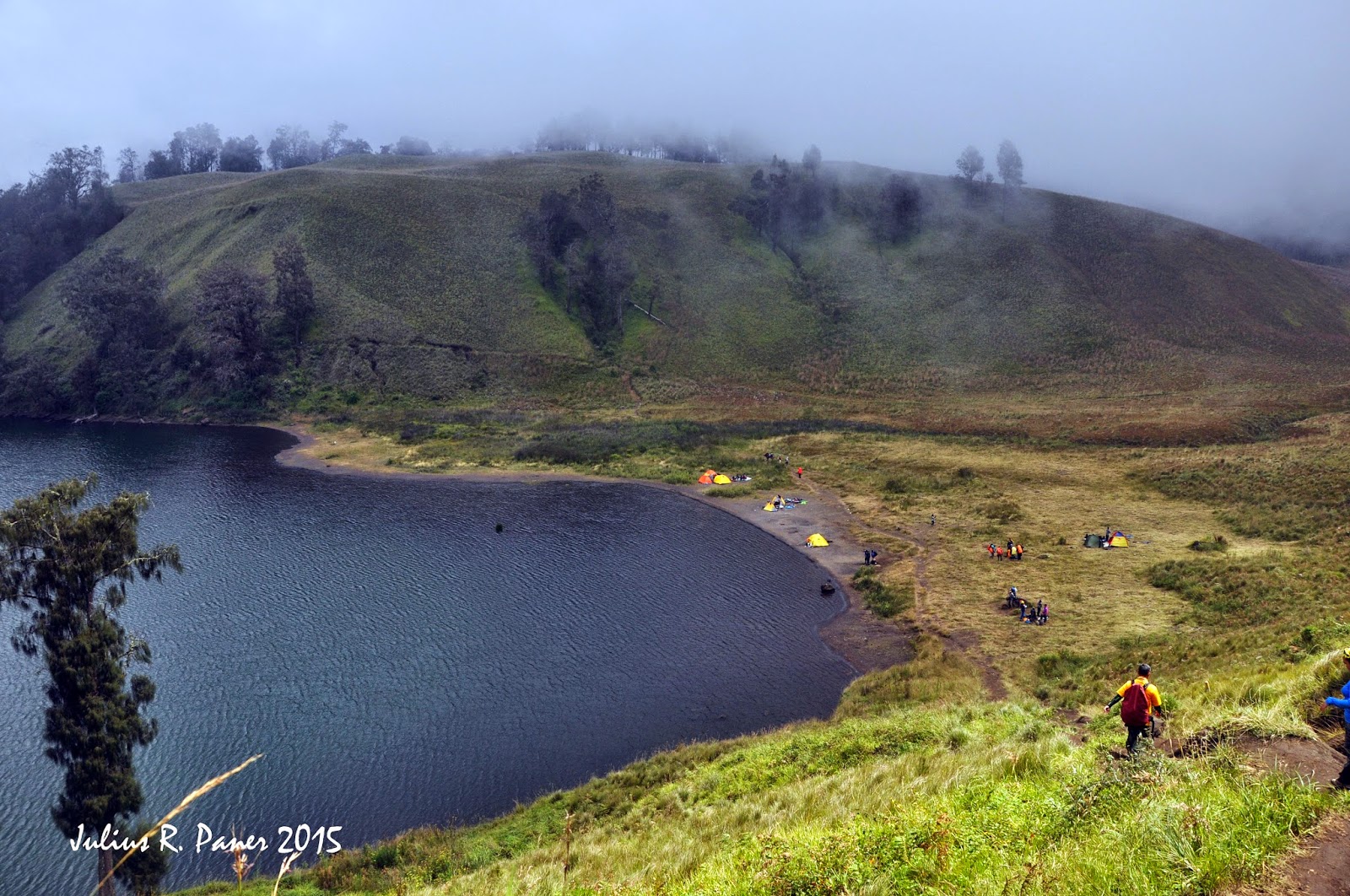
  

Looking at far distance, the lake can even be more tempting. Its beauty is very apparent whichever angle I shoot it. And because it is nestled 2,400 meters above, Ranu Kumbulo is perhaps one of the tallest lakes in Indonesia.


In an overall context, Mt. Semeru is a must-visit mountain if you are a mountaineer residing in Southeast Asia I would rate a bit harder than Mt. Kinabalu. As Josephine also pointed out, Semeru is even more interesting than the famous Mt. Fan Si Pan in Vietnam and all other mountains she visited in Asia.

Note: This article is the first offering I did out of that travel in Indonesia. I will be coming up with my second post in the next couple of days that will feature two minor climbs in the same location.

For the record, this climb is my second international climb with Pare Dockie. The first one we did an assault of Mt. Kinabalo in Sabah, Malaysia two years ago.

Lastly, this climb would not be made possible without the strong support of Miss Josephine. Pardon my saying this but you deserve recognition for your very kind heart especially to your mountaineer friends. Thank you alone, I guess, is not enough but I will be delighted to have these words said to you every now and then. Thank you very much my friend.

Tuesday, April 28, 2015

Afterthought: FIVE MYTHS OF THE MT. APO BOULDER FACE CHALLENGE

The Mt. Apo Boulder Face Challenge has gone a long way. From a mere local quadrathlon participated by only eight teams in 2008, it has now become an international event that captured the interest of international adventure racers and big-time partners.  As part of the organizing team, I am impressed with its world-class transformation. And with the eight challenge concluded just last April 26 this year, I am humbled by the fact that more and more organizations are looking at the Mt. Apo Boulder Face Challenge as their future platform to the advocacy and causes they have been fighting for all through the years of their existence.
  

This year’s new partner is Global Impact, an NGO based in Davao City whose primary purpose is to fight human trafficking in the Philippines. Perennial co-operators continue to pour in resources also like the Aboitiz Power, San Miguel Brewery, Inc., Seaoil, Mountain Hardwear and Recreational Outdoor Exchange (ROX). And the support extended by National Government Agencies and barangay functionaries have made it more stable.

Meanwhile, long-time adventure racer Dexter Nonato of Team Tri-Buddies Tagum finally nailed down the championship trophy of the Open Elite category by clocking a total time of 12 hours, 56 minutes and 48 seconds; beating previous record set by Team Boatman last year. His partner is triathlete Juanito Mahinay. The duo convincingly outmanuevered last year’s second placer Team Wals (Jayrald Daraydo and Ireezbone Barrientos). Team Kaizo (Romeo Mascardo and Dioscoro Genunsalao) was at far third.

As the Mt. Apo Boulder Face Challenge progresses, I have personally observed several myths insinuated by several groups and individuals in the outdoor adventure community. I have listed them one by one and come up with five of the most popular ideas that are practically no basis for truths and therefore are not worth believing.

5. Winning is certain. Just like an adage that goes, the only thing certain in this world is uncertainty itself. This is also applicable in this race. While defending champs of the previous years are heavy favorites to win the succeeding crown, defending the title in this extreme competition is not certain (so as losing). For the record since we started the long route with the summit as the turning point, no champion team had ever defended a crown. Jonathan Pido and Angelito Sibayan, Cresenciano Sabal and Gerald Sabal, Ronald Dagaang and Mario Ecalner, Mark Anthony Rance and April John Maniyog; these are previous champions who failed to defend their titles.


4. It is not worth joining for because Mindanao is not peaceful. We have been in huge existing for eight long years now, perhaps one of the longest-running adventure races in the country where the organizer is spearheaded by a local government. In 2012, we have attracted twelve foreign teams from as far as Australia, United States, Indonesia, Hongkong and Taiwan. This year, Global Impact teamed up with us despite the early Mamasapano encounter in Maguindanao and the massacre in our very own Sta. Cruz Police Station that killed 1 retired policeman and injured 3 others. Lastly, we have maintained an average participating team of 20, showing that the race has been successful in its attempt to develop a culture of peace in an island dubbed as war-zone.


3. The first to arrive in the finish line is the winning team. Boulder Face Challenge is a 24-hour extreme race which prompted more people to believe that the first to arrive in the finish line are automatically the winners. It, however, does not apply here. The race is not a usual triathlon or ultramarathon or a fun run. The accumulated time in the first two disciplines (mountain biking and trail running) will be added to the time consumed in the last two disciplines (water tubing and road running). After a series of strenuous trail running, the time will be cut off in the second transition point for the next day’s activities. Water tubing and road running command lesser energy as compared to mountain biking and trail running, and even if you arrive in the finish line because you manuever fast in water tubing and you run like hell in road running, winning is still not a guarantee. It still depends on how you perform in the mountain biking and trail running stages.


2. Arrival in Checkpoint 01 assures the racer to win the challenge. Time and time again, I have always warned Boulder Face Challenge racers that Checkpoint 01 (Gate1 of San Miguel Brewery, Darong) is not the finish line yet. If you arrive in this area few minutes late it does not follow that you will lose the game already. I have been manning this checkpoint ever since and the problem remains evident that racers thought they already won the game upon arrival in CP 1. It is just the first 13 kilometers of the 48-kilometer uphill biking in Sibulan and Tibolo which actually speaks for more trouble. Again, CP 1 is just CP 1, there are still 20 more CPs that need more focus from the racers. Records have it that all teams who arrived in CP earlier have lesser chances of winning the race.


1. Water Tubing is not a factor. If you think water tubing is not a factor to determine the winnability of a certain Boulder Face Challenge team, think again. Being the third discipline to be performed by racers with a total distance of five kilometers entails another physical and mental strength.  This year’s champion Team Tri-Buddies Tagum strived to take the lead in the tubing leg to keep its close rivals at bay all the way to the finish line. Had they not maintained the lead in the tubing, they might be overtaken by Team Wals. The strong river current of Sibulan River had to be considered, as well as the manuevering of the final meters which is situated in the open seas of Davao Gulf. 


On the other side of things, our office have received overwhelming appreciations from the general public for the success of such activity. With all the individuals, institutions, volunteers, sponsors and racers who have become part of the event this year, saying thank you might be an understatement. We could not have been that successful without your support. 

DAGHANG SALAMAT KANINYONG TANAN.

Monday, April 20, 2015

Mt Guiting-Guiting’s successful climb sets new milestone for LOGSAC

More mountaineering groups and individuals nowadays attempted to scale difficult mountains to which for me has become a mandatory part of the evolution of mountaineering in the Philippines. We always look at how tough those mountains are and we try hard to scale them one by one.


In our pursuit to climb highly-technical mountains in the Philippines, LOGSAC power duo Noel Bartolome (Pawiks) and Henry Gapula (Pagong) successfully scaled Mt. Guiting-Guiting in Romblon last April 11-13, 2015; making yet another history to the already-checkered existence of this mountaineering club. This climb was a conclusion to a failed summit attempt of the same mountain last year by Pawiks, Irvin Joy Alcoriza and Danrev BroƱola.


“We were blessed with a good weather condition this time, that’s why we climbed all the way to the summit with our given itinerary,” said Pagong. G2, as fondly called by the mountaineering community, has its own character to which mountain climbers should adopt. The assault to the summit via the dangerous knife edge entails a vigorous physical and mental strength. Others even said that climbing G2 is only for the braves. The long boat trip from Batangas to Sibuyan Island is another chapter of the expedition to endure.

Mt. Guiting-Guiting forms part of the country’s knife edge trilogy, the other two being Mt. Halcon in Mindoro Oriental and Mt. Mantalingajan of Palawan. These are the very mountains also that are considered the most difficult mountains to climb as there are portions where a 90-degree assault have to be done and a mandatory mountain hugging through that “face-the-wall” track should be surmounted.

When asked about his experience of the knife edge, Pagong echoed without hesitation, “if you are careless you will die, that is how difficult this mountain is,” referring to the high cliffs visible down opposite the rock formations prior to reaching G2’s summit.


In the 8 year history of LOGSAC, I can safely say that this is perhaps one of the most ambitious climb ever done by two of our veteran members. It also sets a new milestone of our young club that will always be remembered by the rest of the group members. My only note is that no matter how difficult a mountain is to be climbed, it can always be done easily through proper planning, hiring of competent guide and coupled with a good weather.